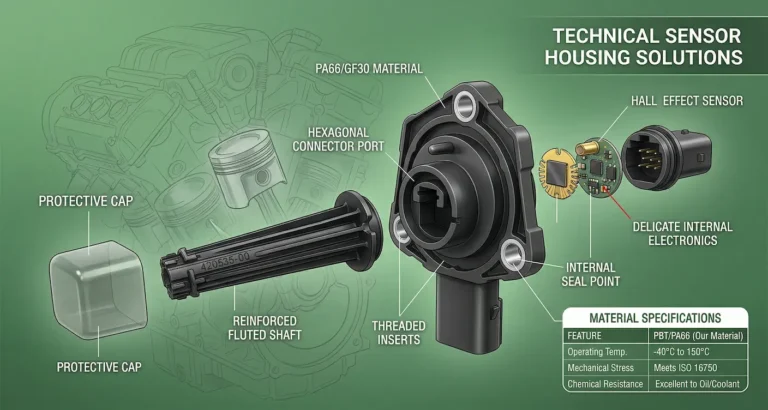
Your engine sputters and fuel economy plummets. You suspect a major issue, but the answer could be a small, overlooked sensor. This tiny part is causing you big headaches.
A Manifold Absolute Pressure (MAP) sensor measures air pressure within your engine's intake manifold. The engine's computer uses this data to understand the engine load, allowing it to precisely adjust fuel delivery and ignition timing for optimal power, efficiency, and clean emissions.
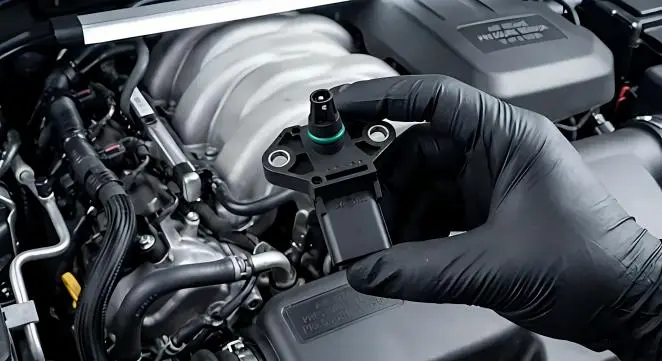
It's a simple component, but its impact on your engine's health is massive. When I first started working with engine management systems, I was amazed at how a sensor the size of my thumb could be the key to solving so many performance puzzles. It's the primary source of information for one of the engine's most critical calculations: how much work is it doing right now? Without this data, the engine is essentially flying blind. So, let's dive deeper into how this sensor works its magic and what happens when things go wrong.
How Does a MAP Sensor Actually Work?
Ever feel lost in the technical jargon of engine parts? It's a complex world, and trying to understand how a single sensor works can feel overwhelming, leaving you in the dark.
A MAP sensor works by converting physical air pressure into an electrical signal. It contains a sensitive pressure-sensing chip that sends this data to the engine's computer, which then calculates the engine's load and adjusts its performance parameters in real-time.
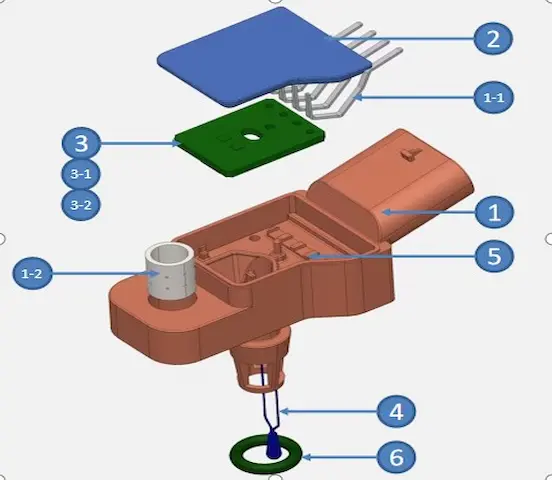
To really get it, you have to look inside the sensor itself. The core of the device is a tiny, silicon pressure-sensing chip. This chip is incredibly sensitive to changes in pressure. As the pressure in the intake manifold changes based on your throttle input and engine speed, this chip flexes, altering its electrical resistance. This change is then translated into a voltage signal that gets sent directly to the Engine Control Unit (ECU).
From a manufacturing perspective, we build these to be tough. The chip is mounted on a circuit board, which is then sealed inside a durable plastic housing. We often fill this housing with epoxy resin to protect the delicate electronics from the intense vibration and heat of the engine bay. The sensor is then mounted directly onto the intake manifold with a screw, and an O-ring is used to create a perfect seal, ensuring that it only reads the pressure inside the manifold and isn't affected by outside air. It's a precise and robust piece of engineering.
What's the Difference Between a MAP and a TMAP Sensor?
You hear terms like MAP and TMAP thrown around. This alphabet soup of auto parts is confusing, and you might worry you're choosing or discussing the wrong component for your needs.
A standard MAP sensor only measures air pressure. A TMAP, or Temperature and Manifold Absolute Pressure sensor, is an integrated component that measures both air pressure and air temperature in a single unit, providing more complete data to the ECU.
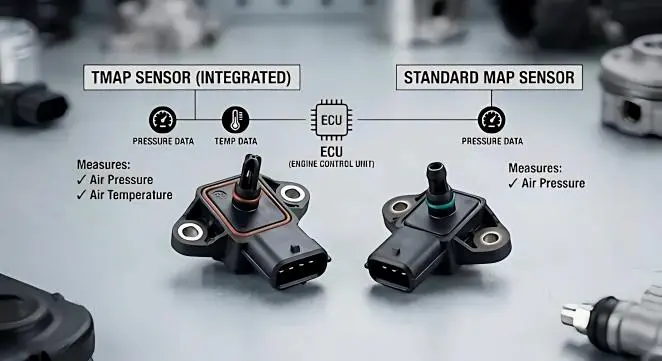
Think of a TMAP as an evolution of the MAP sensor. While a MAP sensor does a great job of measuring engine load, the ECU needs another piece of information to be truly precise: air temperature. The density of air changes with temperature—colder air is denser than warmer air. For a perfect air-fuel mixture, the ECU needs to know the density of the air entering the engine.
This is where the TMAP shines. It combines two sensors into one small package. It has the pressure-sensing chip we discussed, but it also includes a Negative Temperature Coefficient (NTC) thermistor. The thermistor's electrical resistance changes predictably with temperature. By reading both the pressure from the chip and the temperature from the thermistor, the ECU gets a much clearer picture. It can calculate air density precisely, which allows for finer control over fuel injection. This integration saves space, reduces wiring, and ensures the pressure and temperature data are perfectly synchronized, eliminating any information gaps.
Why are MAP Sensor Readings so Critical for My Engine?
Your engine's computer needs good information to work properly. Bad data in means bad performance out. You can't afford guesswork when it comes to engine health and efficiency.
MAP sensor data is vital because it directly tells the Engine Control Unit (ECU) the engine's load. The ECU uses this to precisely control the air-fuel ratio and ignition timing, the two most important factors for power, fuel economy, and emissions.
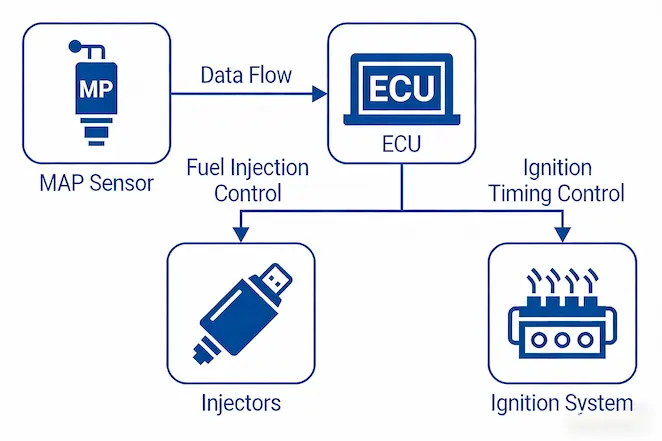
Let's break down what the ECU does with the information. The MAP sensor's voltage signal tells the ECU the absolute pressure inside the intake manifold. This is a direct indicator of engine load.
- Low Pressure (High Vacuum): When your engine is idling, the throttle is closed. This creates a strong vacuum, so the manifold pressure is very low. The MAP sensor reports this, and the ECU injects just a small amount of fuel and adjusts ignition timing for a smooth idle.
- High Pressure (Low Vacuum): When you press the accelerator hard, the throttle opens wide. Air rushes in, and the manifold pressure rises to be close to the atmospheric pressure outside. The MAP sensor signals this high-load condition, and the ECU immediately injects more fuel and advances the ignition timing for maximum power.
This relationship is constant and critical. Here’s a simple table to illustrate:
| Engine State | Manifold Pressure | ECU Response |
|---|---|---|
| Idling / Decelerating | Low Pressure | Reduces fuel, retards timing |
| Cruising at steady speed | Medium Pressure | Optimizes fuel/timing for efficiency |
| Full Acceleration | High Pressure | Increases fuel, advances timing |
If the sensor provides bad data, the whole system fails. A faulty sensor can lie to the ECU, leading to poor performance, wasted fuel, and even potential engine damage.
What are the Signs of a Failing MAP Sensor?
Your car is running poorly, but maybe the check engine light isn't on. You're left guessing the cause, and this uncertainty can be stressful and lead to more expensive repairs later on.
Common signs of a bad MAP sensor include rough idling, poor fuel economy, hesitation during acceleration, and black smoke from the exhaust. A lack of power or a failed emissions test are also strong indicators, often accompanied by a check engine light.
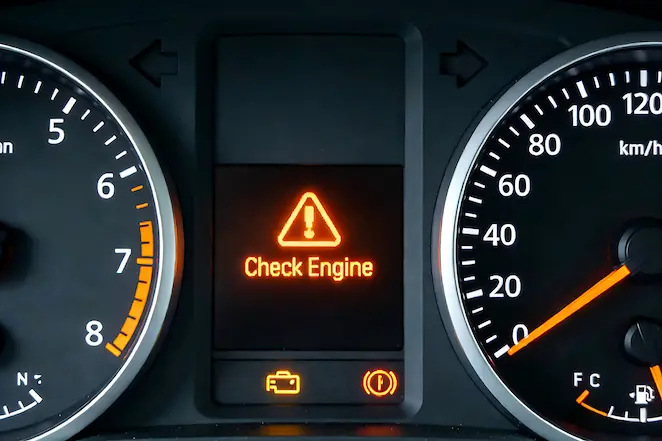
Each symptom of a failing MAP sensor can be traced back to the incorrect information it's sending to the ECU.
- Poor Fuel Economy & Black Smoke: This often happens when the sensor is stuck reading a high pressure (high load). The ECU thinks the engine is constantly under acceleration and dumps in too much fuel. This unburnt fuel exits the exhaust as black smoke and absolutely destroys your fuel mileage. It's a classic "rich" condition.
- Rough Idle & Hesitation: Conversely, if the sensor gets stuck reading a low pressure (low load), the ECU will think the engine is just idling. It provides too little fuel. When you try to accelerate, the engine stumbles and hesitates because it's being starved of the fuel it needs. This is a "lean" condition.
- Failed Emissions Test: Both rich and lean conditions will cause your vehicle to fail an emissions test. The carefully balanced chemistry required for the catalytic converter to work is thrown off completely.
Often, a failing MAP sensor will trigger the Check Engine Light and store a Diagnostic Trouble Code (DTC), such as P0105, P0106, or P0107. Reading these codes is the first step in a professional diagnosis.
Conclusion
The MAP sensor is a small but mighty part. Understanding its function is key to diagnosing engine issues and ensuring peak performance and efficiency for any vehicle in your fleet.