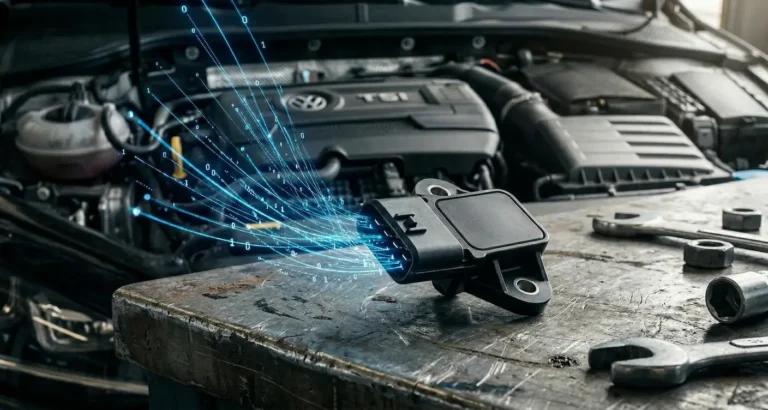
Worried about sensor failures damaging your brand's reputation? Cheap plastic housings crack under pressure, leading to costly returns and unhappy customers. The right material choice is your first line of defense.
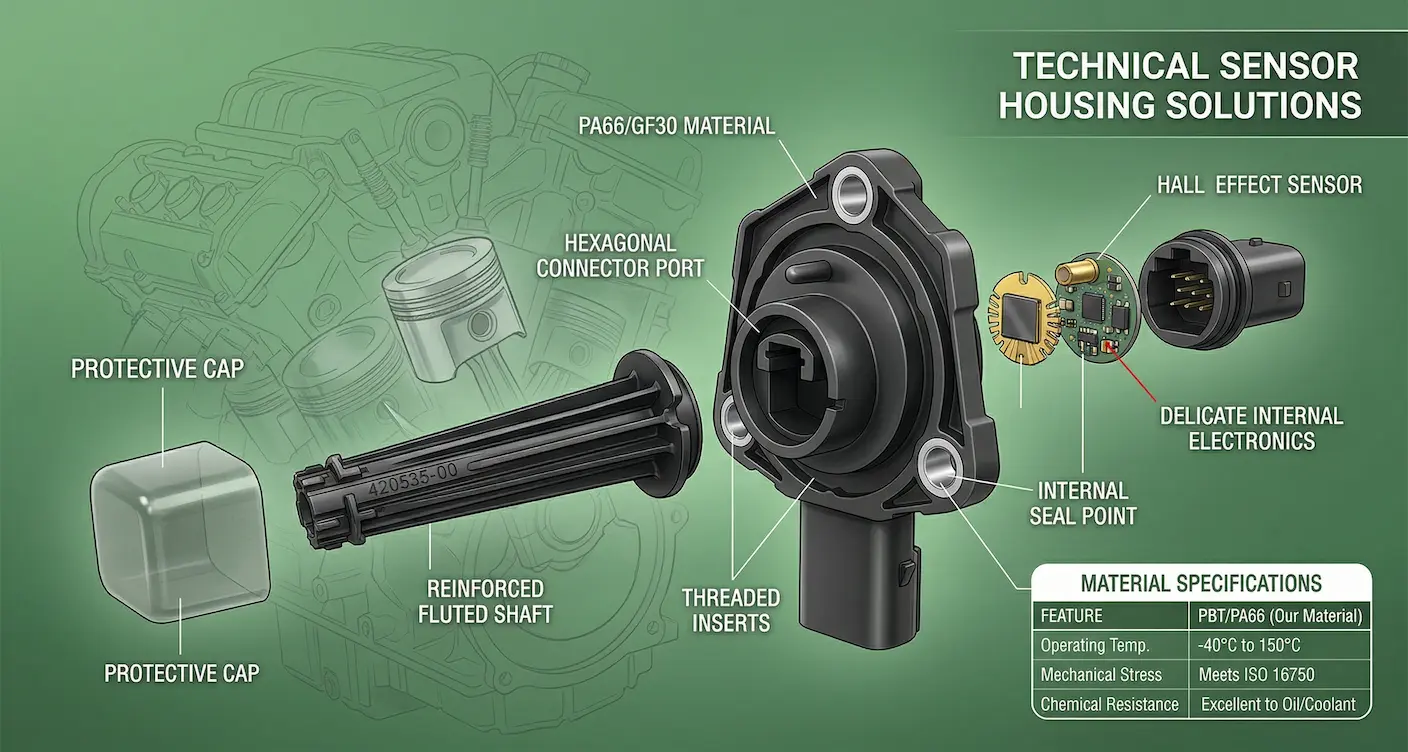
The best sensor housings are made from premium engineering plastics, like those from world-renowned suppliers such as BASF. This material ensures long-term reliability by providing superior resistance to extreme temperatures, constant vibration, and corrosive engine fluids, protecting the delicate electronics inside the sensor.
I’ve seen it happen too many times. A client comes to us after experiencing a high failure rate with another supplier. The problem almost always traces back to the material used for the sensor housing. It’s a small detail that makes a huge difference. A well-engineered sensor is useless if its protective shell fails. Let's break down why the plastic we choose is so critical for the performance and longevity of your products. It’s not just plastic; it’s peace of mind for you and your customers.
How Can Sensor Housings Withstand Extreme Engine Temperatures?
Your customers' engines run hot, and cold starts are brutal. Inferior plastic housings can't handle this swing; they warp, melt, or crack, causing immediate sensor failure and comebacks.
We solve this by exclusively using premium engineering plastics rated for extreme automotive environments. Our sensor housings can withstand temperatures from a freezing -40°C to a scorching 150°C without deforming or cracking.
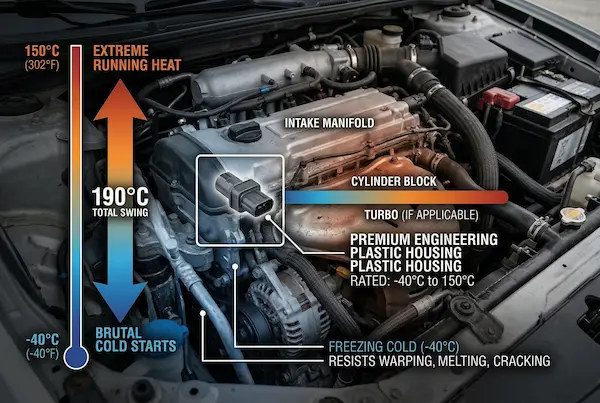
I remember a batch of sensors we tested from a potential supplier years ago. They looked great, but we put them through our standard thermal cycling test, which mimics the real world of an engine bay. After just a few cycles between hot and cold, the housings started to deform. The seal was compromised, and moisture got in. That’s why we are so strict about our material selection. The engine bay is a place of extremes. In the winter, a car might start at -30°C or colder. Within minutes, the area around the engine can climb well above 100°C. In summer traffic, those temperatures can soar even higher, reaching up to 150°C. A standard plastic simply can't survive this. Our commitment to using materials like BASF's specialized polymers means the housing maintains its shape and structural integrity, no matter the condition. This stability is essential for protecting the sensitive electronic components inside the sensor for years of reliable service.
Material Performance Under Thermal Stress
| Feature | Standard Plastic (e.g., ABS) | Our Engineering Plastic (e.g., PBT/PA66) |
|---|---|---|
| Operating Temperature | -20°C to 80°C | -40°C to 150°C |
| Heat Deflection | Becomes soft, deforms | Remains rigid and stable |
| Cold Brittleness | Becomes brittle, prone to cracks | Retains flexibility, resists impact |
| Long-Term Effect | Warping, seal failure, cracking | Consistent performance and protection |
What Makes a Sensor Housing Strong Enough for Rough Roads?
Engine vibrations and road shocks are relentless. A brittle or weak plastic housing will eventually crack under this constant stress, exposing the sensor to damage and leading to certain failure.
Our sensor housings are built to endure. We use high-strength engineering plastics that meet or exceed rigorous automotive standards like ISO 16750 for mechanical stress, resisting both high-frequency vibrations and sudden impacts.
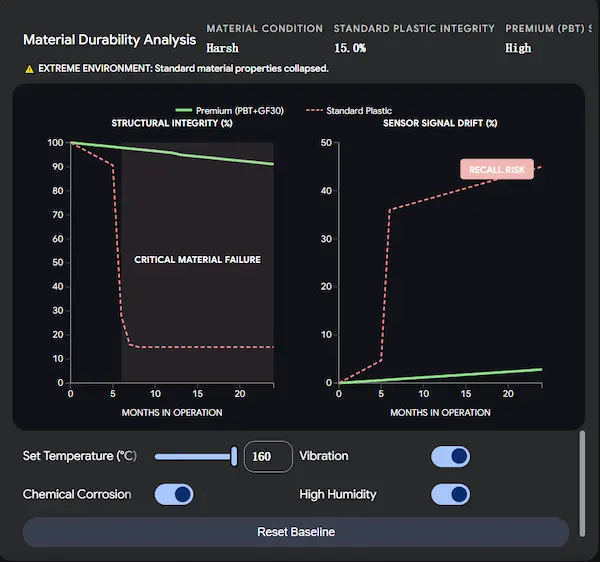
We have a shaker table in our lab that can simulate the worst vibrations a vehicle will ever experience. One time, we mounted one of our MAP sensors next to a competitor's on the table. We ran a program that mimicked thousands of miles of driving on rough roads. After a few hours, the competitor's sensor housing developed micro-cracks around the mounting points. Ours looked like it had just come out of the mold. This is what we mean by mechanical strength. It's not just about surviving a single drop. It’s about withstanding millions of tiny vibrations over the lifetime of the vehicle. The ISO 16750 standard is our guide here; it outlines tests for vibration, mechanical shock, and impact. By using plastics reinforced with materials like glass fiber, we ensure our housings don't just pass these tests but excel. This strength prevents cracks and ensures the o-rings and seals remain perfectly compressed, keeping dust, oil, and water out.
Meeting the ISO 16750 Standard
The standard specifies tests for components mounted on the engine, which is one of the harshest locations.
- Vibration Test: Subjects the sensor to a range of frequencies and G-forces for hundreds of hours to simulate engine harmonics.
- Mechanical Shock Test: Simulates potholes and rough impacts to ensure the housing doesn't fracture.
- Drop Test: Ensures durability during handling and installation.
A housing that passes these tests guarantees it can protect the internal electronics for the long haul.
Why is Chemical Resistance Crucial for Sensor Longevity?
An engine bay is a hostile chemical environment. Splashes of motor oil, coolant, and brake fluid are common. These fluids can degrade inferior plastics, making them brittle or soft and compromising the seal.
Our sensor housings are made from chemically inert engineering plastics. They are specifically formulated to resist corrosion from engine oil, antifreeze, and other common automotive fluids, guaranteeing a perfect seal for the sensor's entire lifespan.
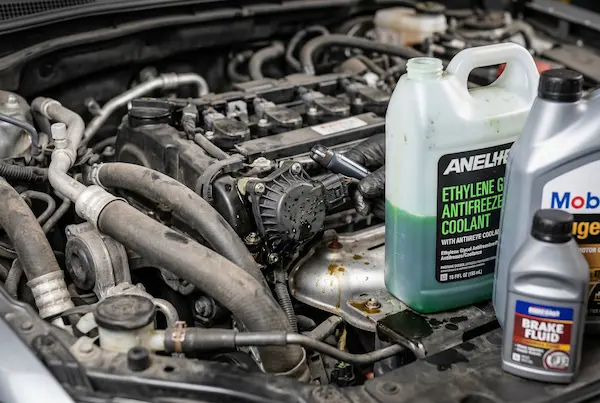
Early in my career, I saw a warranty claim for a batch of oil level sensors that were failing prematurely. When we investigated, we found that the plastic housing had become swollen and soft. The engine oil had slowly broken down the polymer chains, causing the housing to lose its shape and the seal to fail. This is a silent killer for sensors. It doesn't happen overnight. It's a slow process of degradation. That's why we are so meticulous about chemical compatibility. The materials we use, such as PBT (Polybutylene terephthalate) and PA66 (Polyamide 66), are known for their excellent resistance to hydrocarbons and glycols. We perform long-term immersion tests, soaking our housings in hot oil and coolant for over 1,000 hours to ensure there is no degradation, no swelling, and no change in mechanical properties. This ensures the sensor remains perfectly sealed and protected from the harsh chemical cocktail found under the hood.
Chemical Exposure in the Engine Bay
| Fluid | Potential Effect on Inferior Plastic | Our Material's Performance |
|---|---|---|
| Engine Oil | Swelling, softening, loss of seal | No effect, remains stable |
| Coolant (Glycol) | Brittleness, stress cracking | Fully resistant, no degradation |
| Brake Fluid | Severe chemical attack, dissolution | Inert, no damage |
| Degreasers/Cleaners | Discoloration, surface cracking | Resists common workshop chemicals |
Why Does a 'Dirty' Looking Sensor Housing Mean Better Quality?
You receive a shipment of new sensors, and the black plastic housings have a faint, whitish film on them. Your first thought might be that they are old, defective, or dirty.
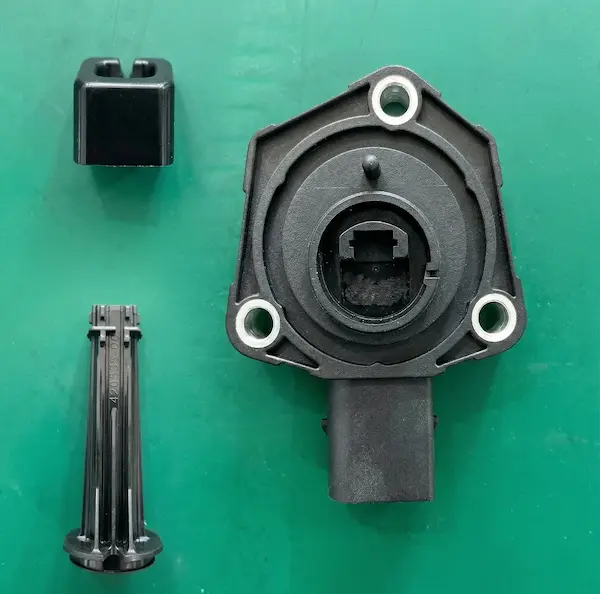
That whitish, dusty "bloom" on the surface is actually a sign of a high-performance material. It indicates the presence of special additives that migrate to the surface, proving its superior formulation for heat and strength.

I'll never forget a call from a new client. He was upset because the sensor housings he received didn't look "perfectly black." They had a slight, uneven white haze. He thought we had sent him a bad batch. I had to smile and explain that what he was seeing was actually a sign of premium quality. That phenomenon is called "bloom." High-performance engineering plastics, especially those reinforced with glass fibers or containing specific heat stabilizers, are complex chemical compounds. Over time, some of these beneficial additives can migrate to the surface of the part. This doesn't harm the part at all; in fact, it's visual proof that the plastic contains the ingredients needed for superior performance. A cheaper, basic plastic might look shiny and perfectly black, but it lacks the robustness required for an engine bay. So, when you see that slight haze, don't think of it as a defect. Think of it as the mark of a truly durable, well-engineered component designed for performance, not just for show.
Conclusion
Choosing premium engineering plastics for sensor housings is critical. It guarantees resistance to heat, vibration, and chemicals, ensuring long-term reliability and protecting your brand's reputation for quality.