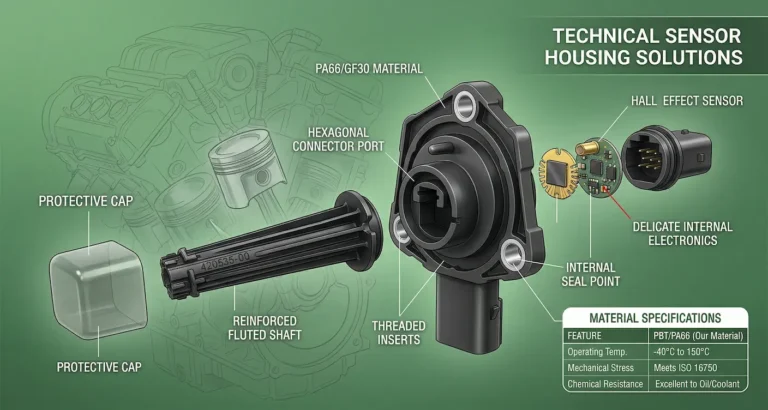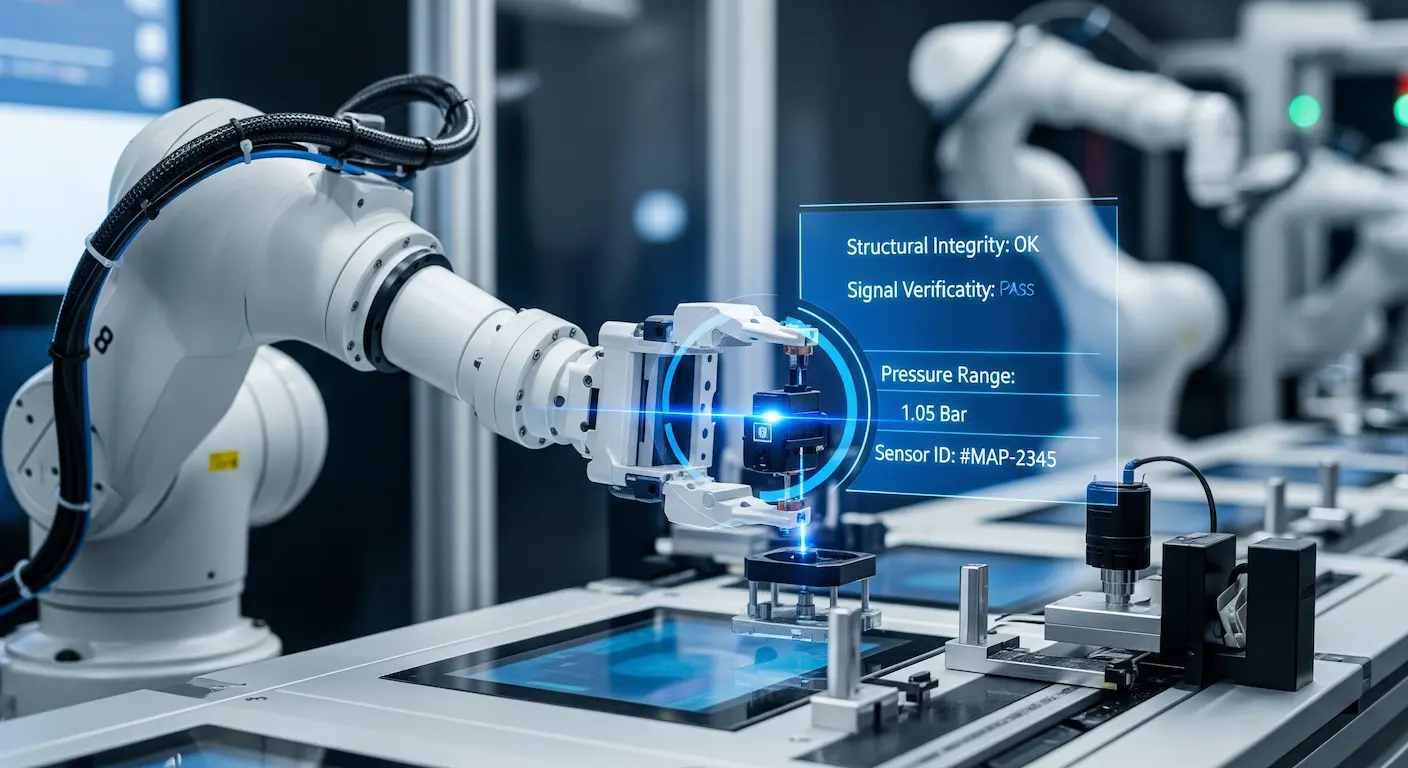
Worried about inconsistent sensor quality? A bad batch can damage your brand's reputation. We solve this with our strict 100% End-of-Line (EOL) testing on every single sensor.
100% EOL testing means every sensor undergoes a multi-step quality control process before shipping. This includes visual inspection, structural checks, functional signal testing, and dimensional verification to guarantee it meets strict OEM specifications. This ensures every part you receive is reliable and ready for installation.
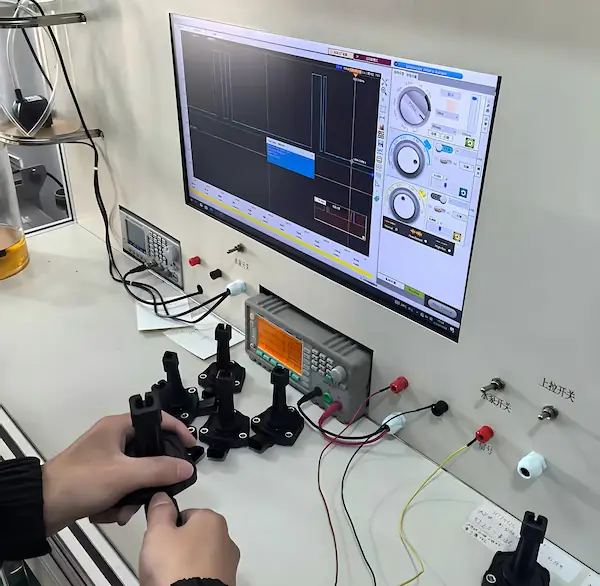
This process might sound thorough, but what does it actually involve day-to-day on our factory floor? I want to pull back the curtain and show you the exact steps we take for every sensor that carries our name. My goal is for you to feel as confident in our products as we are. Let's walk through the journey of a sensor from the assembly line to the shipping box.
Is Every Sensor Physically Inspected Before Packing?
Receiving sensors with cosmetic defects or weak welds? This reflects poorly on your brand. Our meticulous physical inspection process prevents this from ever happening.
Yes, every single sensor is physically and visually inspected by a trained technician. We clean off any residual oil or glue and carefully check the housing and weld points for strength and integrity. This ensures the product you receive is clean, robust, and professionally finished.
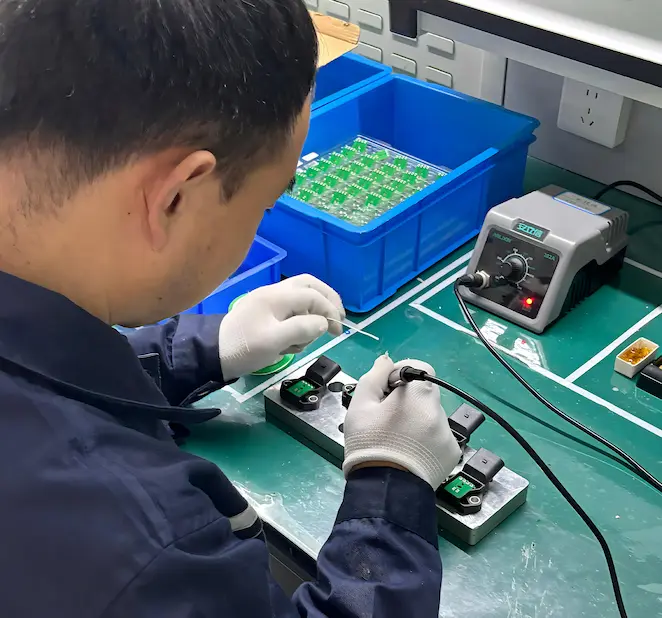
This first step is fundamental, but it's one of the most important. You can have the most advanced electronics in the world, but if the physical body of the sensor is compromised, it will fail. I remember a time early in my career when a competitor's part failed in the field because of a micro-crack in the plastic housing that wasn't caught at the factory. That experience taught me that you can never, ever skip the basics. Our team is trained to look for these tiny flaws that automated systems might miss. This hands-on approach is our first line of defense against defects.
The Two Pillars of Physical Inspection
We break this stage down into two key areas: cleanliness and structural integrity. Both are equally critical for the final quality of the product that lands in your warehouse. A sensor must not only work perfectly but also look and feel like a high-quality component.
| What We Check For | Why It Matters for You |
|---|---|
| Excess glue, oil, or debris | Ensures a professional appearance and prevents contamination of other engine components. |
| Scratches, scuffs, or discoloration | Guarantees the product looks new and has not been mishandled during production. |
| Cracks or stress marks in the housing | Prevents moisture or debris from entering the sensor, which would cause premature failure. |
| Integrity of welds and seals | Confirms the sensor is hermetically sealed and can withstand engine bay pressures and heat. |
How Do We Guarantee Each Sensor Performs Correctly?
A sensor that looks right but doesn't send an accurate signal is useless. These inaccuracies can cause serious engine performance issues and trigger check engine lights, frustrating your customers.
We guarantee performance by connecting every sensor to specialized signal detection equipment. This simulates real-world conditions, allowing us to verify that critical outputs for pressure, temperature, or position are accurate and stable across its entire operating range. Only sensors that pass this functional test proceed.
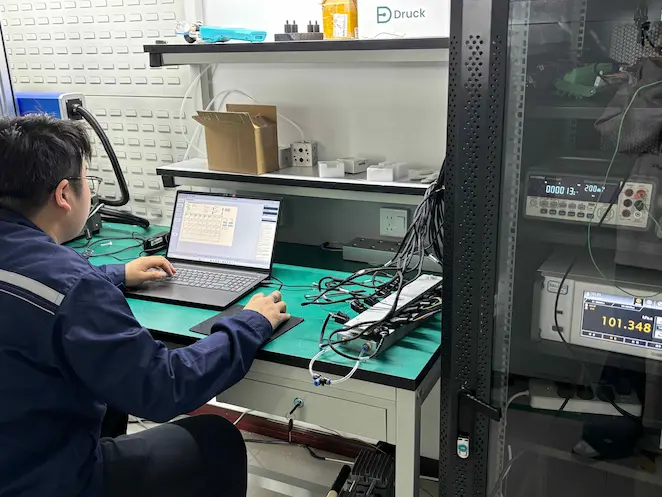
This is the "heartbeat" check for every sensor. After it passes the physical inspection, we plug it into a test bench designed specifically for that sensor type. This isn't just a simple pass/fail check. The equipment runs the sensor through a complete performance curve. For a MAP sensor, for example, we simulate a range of pressures from low to high vacuum and ensure the voltage output corresponds perfectly at every point. I personally oversee our equipment calibration schedule. An uncalibrated test gives a false sense of security, which is worse than no test at all. I know our clients' reputations depend on the data these sensors provide, so we treat the accuracy of our testing process with extreme seriousness.
Simulating Real-World Conditions
Our test benches are programmed to mimic the demanding environment inside an engine. We don't just check if it works; we check if it works correctly under pressure, at various temperatures, and through its full range of motion or measurement.
| Sensor Type | Key Parameter Tested | Expected Outcome |
|---|---|---|
| MAP/TMAP Sensor | Voltage output across a full range of pressure/vacuum | A smooth, linear signal that matches the pre-defined performance curve. |
| Coolant Temp Sensor | Resistance changes at various simulated temperatures | Accurate resistance readings that correspond to specific temperature points. |
| Crank/Camshaft Sensor | Signal generation as a toothed wheel passes | A clean, consistent square wave or sine wave signal with no dropouts. |
| Wheel Speed Sensor | Signal output at different rotational speeds | A stable and accurate frequency signal that increases linearly with speed. |
What Ensures a Perfect Fit Every Time?
Are you frustrated with aftermarket parts that almost fit? Installation problems waste your customers' time and money, and reflect badly on your inventory. We eliminate this with our precision measurement process.
We use a Coordinate Measuring Machine (CMM) to ensure a perfect fit. This advanced tool measures the sensor's critical dimensions, mounting points, and connector positions with microscopic accuracy. This guarantees that every unit conforms precisely to OEM specifications for hassle-free installation.
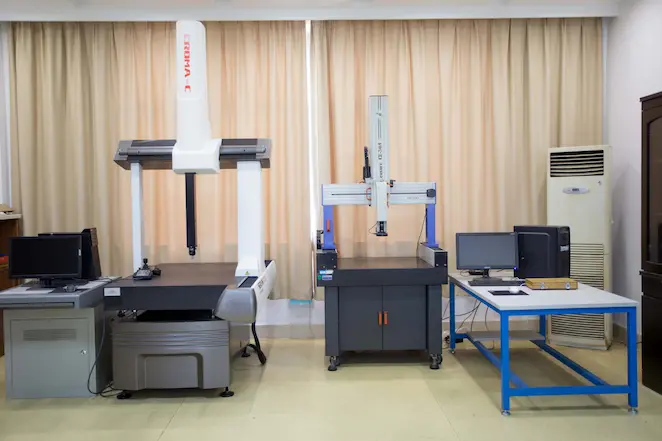
I've seen mechanics struggle for hours with a part that is off by just half a millimeter. It's incredibly frustrating for them and leads to costly returns for distributors. That's why we invested in CMM technology years ago. It completely removes the guesswork from dimensional verification. While calipers are useful for simple checks, a CMM creates a full 3D digital map of the part, comparing dozens of critical points against the original CAD design. This applies not just to the first article off the line, but to random samples throughout the production run to ensure the tooling remains perfect. It ensures the mounting holes line up, the connector will click into place, and the sensor body will clear all surrounding components.
Beyond the Ruler: The Role of the CMM
A CMM is a cornerstone of modern manufacturing quality control. It provides a level of detail and repeatability that manual methods simply cannot match. It is our guarantee to you that the part you receive from us will drop right into place, the first time.
| Feature | Manual Measurement (Calipers) | CMM Measurement |
|---|---|---|
| Accuracy | Dependent on operator skill; typically accurate to ~0.02mm. | Extremely high; accurate to the micron level (~0.001mm). |
| Repeatability | Varies between operators. | Nearly 100% repeatable, as the process is automated. |
| Data Capture | Records single data points one at a time. | Captures hundreds of points to verify complex shapes and relationships. |
| Use Case | Good for simple length, width, and diameter checks. | Essential for verifying hole positions, angles, and geometric tolerances. |
How Do We Validate the Durability of an Entire Batch?
Worried that a sensor might look good and test well now, but fail prematurely after a few months of use? A single early failure can destroy a customer's trust in your brand.
While we test every sensor for initial function, we also validate long-term durability through batch sampling. We pull at least 8% of sensors from each production run for intensive, and often destructive, fatigue testing. This confirms the entire batch is built to last.
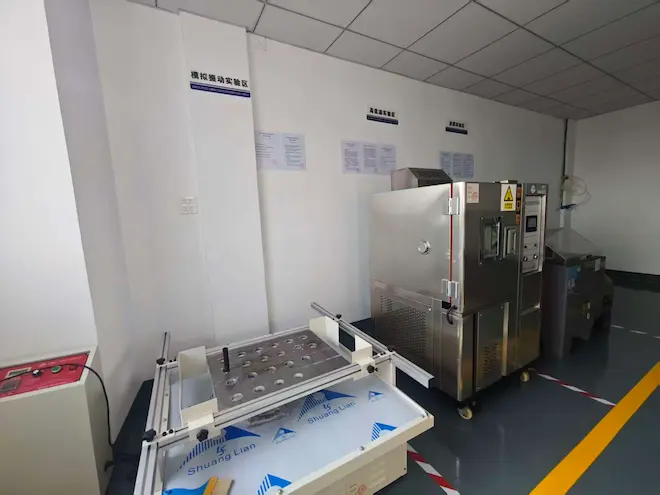
Some people ask me why we would take perfectly good parts and test them until they break. I see it as a critical investment in quality. By pushing a statistical sample to its absolute limit, we learn about the true resilience of our design and production process for that specific batch. If a sample from a batch fails our thermal shock test, for example, the entire batch is quarantined and subjected to 100% re-inspection. This 8% sample test is our ultimate safety net. It validates that the materials we used, the assembly process, and the electronic components can withstand years of brutal engine bay conditions. This knowledge is what allows us to confidently stand behind every part we ship.
Pushing Our Sensors to the Limit
Our durability lab simulates the harshest conditions a sensor will ever face. This accelerated life testing gives us confidence that the entire production run meets our high standards for longevity and reliability.
| Test Type | What It Simulates | Why It's Important |
|---|---|---|
| Thermal Shock | Rapid temperature swings from deep cold to extreme heat. | Ensures the housing, seals, and electronics won't crack or fail from expansion. |
| Vibration Test | The constant shaking and harmonics of a running engine. | Verifies that all internal components and solder joints are secure and won't break. |
| Pressure Cycling | Repeatedly applying and releasing high pressure. | Confirms the sensor's diaphragm and seals can withstand millions of pressure cycles. |
| Salt Spray Test | Exposure to corrosive road salt and moisture. | Checks the corrosion resistance of the housing, pins, and electrical connectors. |
Conclusion
Our 100% EOL testing is not a slogan. It is a multi-stage promise of quality, ensuring every sensor you receive from us is reliable, accurate, and built to last.