Your customers are returning oxygen sensors, complaining they failed too soon. This costs you money, hurts your brand's reputation, and creates frustrating warranty claims. Understanding why is the first step.
The top three reasons aftermarket oxygen sensors fail early are contamination, thermal shock, and physical damage. Sourcing high-quality sensors and addressing underlying engine issues are the best ways to prevent these premature failures and protect your customers from comebacks.
I've been in the auto parts manufacturing business for a long time. I've seen countless sensors returned for warranty, and I can tell you that most of the time, the sensor itself isn't defective. Instead, it's a victim of another problem in the engine or a mistake during installation. Understanding these root causes is critical for any parts distributor or brand. It helps you manage warranty claims better, educate your customers, and ultimately, source more reliable products. Let's look at the main culprits I see every day.
Is Contamination the Silent Killer of Your O2 Sensors?
A sensor fails, but it looks fine from the outside. This is confusing for mechanics and leads them to question the quality of your part, causing frustrating returns for your business.
Yes, contamination is a primary cause. Things like silicone, antifreeze, and oil get into the exhaust and coat the sensor. This coating blocks the sensor from reading oxygen levels correctly, leading to failure.
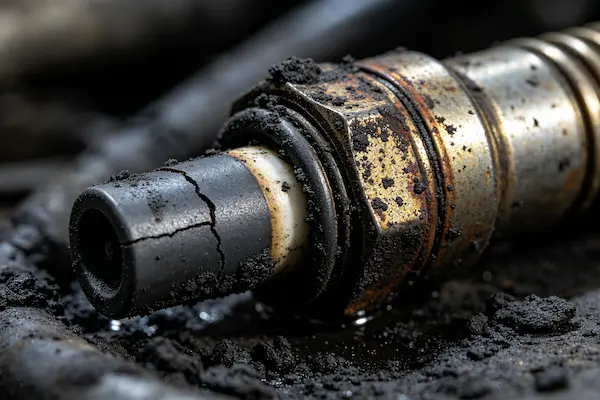
In my experience, contamination is the number one reason for premature oxygen sensor failure. The sensor's job is to "breathe" exhaust gas through tiny pores in its ceramic element. When contaminants coat these pores, the sensor suffocates. It can no longer get an accurate oxygen reading, so it sends bad data to the ECU. This triggers a check engine light and often gets blamed on the new sensor. As a manufacturer, we build our sensors to be robust, but even the best sensor can't survive in a contaminated environment.
Common Contaminants
The type of contamination can tell you a lot about the engine's health.
- Silicone: Using the wrong type of RTV sealant on engine parts is a classic mistake. When that sealant cures, silicone particles can travel into the exhaust and bake onto the sensor, leaving a white, glassy coating.
- Antifreeze: A leaking head gasket or a cracked cylinder head can allow coolant to enter the combustion chamber. When it burns, it leaves a chalky white or greenish deposit on the sensor tip.
- Oil: Worn piston rings or valve seals can cause the engine to burn oil. This results in a thick, black, sooty deposit that fouls the sensor.
| Contaminant | Source | Appearance on Sensor |
|---|---|---|
| Silicone | Improper RTV gasket sealant | Shiny, white, or grayish coating |
| Antifreeze | Internal coolant leak | Chalky white or greenish deposits |
| Oil / Carbon | Excessive oil consumption | Black, sooty, or oily buildup |
For our B2B clients, understanding this is key. When you get a warranty return, inspect the sensor tip. The evidence can help you determine if it's a part defect or an engine problem, saving you from unnecessary warranty payouts.
Can Extreme Heat Really Crack Your Oxygen Sensors?
Your customer installs a new sensor, and it works great for a week. Then, it suddenly fails without warning. This makes your products seem unreliable and unpredictable, damaging customer trust.
Absolutely. Rapid temperature changes can cause thermal shock, cracking the sensor's internal ceramic element. Also, engine problems like misfires can cause extreme overheating, which cooks the sensor from the inside out.
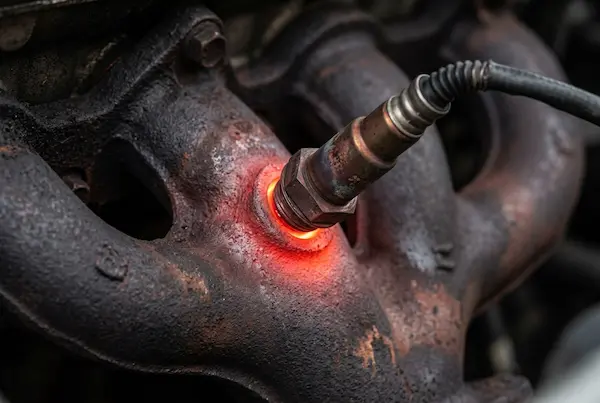
The core of an oxygen sensor is made of a special ceramic called zirconia. While it's designed to withstand very high temperatures, it's vulnerable to rapid changes in temperature, a phenomenon known as thermal shock. Imagine splashing cold water from a puddle onto an exhaust pipe that's glowing red hot. That sudden temperature drop can cause microscopic cracks in the ceramic, leading to immediate failure. I've seen this happen more often on vehicles that are lowered or have missing splash shields.
The Dangers of Heat
Beyond sudden shocks, consistently high temperatures also degrade the sensor over time.
- Thermal Shock: This is an instant event. The ceramic can't handle the stress of contracting so quickly, and it cracks. The sensor's signal will become erratic or fail completely.
- Engine Overheating: A lean fuel condition or a constant engine misfire can send unburned fuel into the exhaust. This fuel can ignite in the catalytic converter or exhaust manifold, creating temperatures far beyond the sensor's design limits (often over 900°C or 1650°F). This slowly bakes the sensor's internal components, causing it to fail prematurely.
| Failure Mode | Cause | Symptom |
|---|---|---|
| Thermal Shock | Sudden cooling (e.g., water splash) | Instant failure, erratic signal |
| Overheating | Lean mixture, misfires, clogged cat | Slow degradation, lazy response |
This is why our quality control is so strict. As an IATF 16949 certified manufacturer, we put our sensors through rigorous thermal cycling tests. We heat them up and cool them down thousands of times to ensure the ceramic and internal connections can withstand the stress. Sourcing parts from a manufacturer who performs these tests is your best defense against heat-related failures.
Could Improper Installation Be Damaging Your Oxygen Sensors?
A technician calls you, angry that the sensor you sold them was "dead on arrival." This leads to costly overnight shipping for a replacement and a damaged relationship with your client.
Yes, improper handling is a huge problem. Dropping a sensor, using an impact wrench, or getting anti-seize on the wrong part can damage it before it's even seen a mile of road.
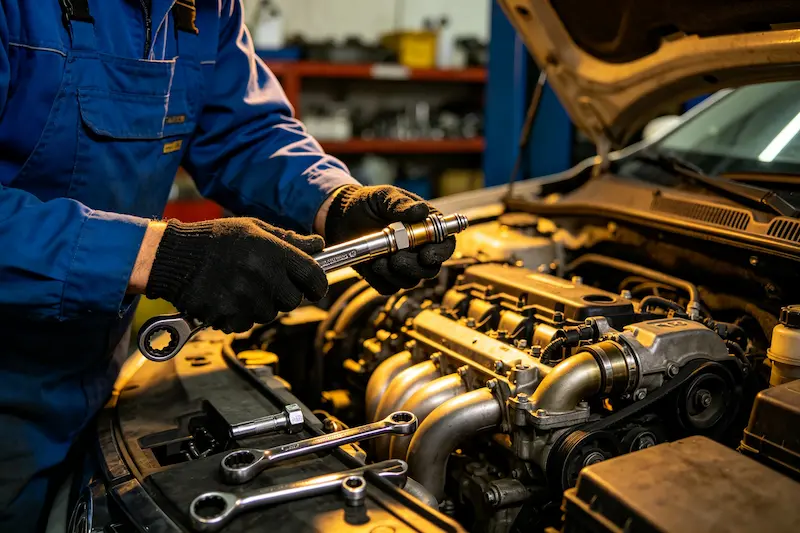
I once visited a workshop and watched a mechanic struggle to remove an old oxygen sensor. He finally got it out, then grabbed the new one, dropped it on the concrete floor, picked it up, and installed it with an impact wrench. I knew right then that sensor wouldn't last long. Oxygen sensors are sensitive instruments. The ceramic element inside is brittle. Dropping it, even from a short height, can create internal fractures that lead to failure.
Simple Mistakes, Big Problems
Technicians are busy, but a few seconds of carelessness can ruin a brand-new part.
- Impact from Drops: The internal ceramic element can crack easily. The damage might not be visible, but the sensor will fail quickly.
- Using the Wrong Tools: An impact wrench can send damaging vibrations through the sensor and makes it easy to over-torque. Over-tightening can crush the gasket and damage the sensor body.
- Contaminating the Tip: Many sensors come with anti-seize on the threads. If this compound accidentally gets on the sensor's protective metal shield (the "tip"), it can block the pores and cause the sensor to read incorrectly.
| Do | Don't |
|---|---|
| Handle with care | Drop the sensor on a hard surface |
| Use a proper O2 sensor socket | Use an impact wrench or standard wrench |
| Torque to manufacturer specs | Over-tighten the sensor |
| Keep anti-seize on threads only | Get anti-seize on the sensor tip |
As a supplier, you can help prevent this. We design our packaging to protect the sensors during shipping. We also recommend that our B2B clients pass on clear handling instructions to their customers. A simple reminder to treat the sensor like a sensitive electronic component, not a simple bolt, can save everyone a lot of trouble. This is about being a partner in quality, not just a parts provider.
Conclusion
The main reasons O2 sensors fail are contamination, heat stress, and bad installation. By sourcing high-quality, tested parts and educating users, you can prevent most premature failures and protect your business.